

Corporate Event Design
Corporate event design starts long before the stage is built. It brings together business objectives, creative direction, staging, AV, lighting, content, audience flow, and production to create an experience that works for both the audience and the production team.
For conferences, executive summits, sales kickoffs, and large-scale corporate events, the design also has to account for venue limitations, sightlines, multi-room production, technical risk, setup time, and live execution.
A concept may look impressive on paper, but it needs to work just as well when the equipment is loaded in, the speakers take the stage, and the show goes live.
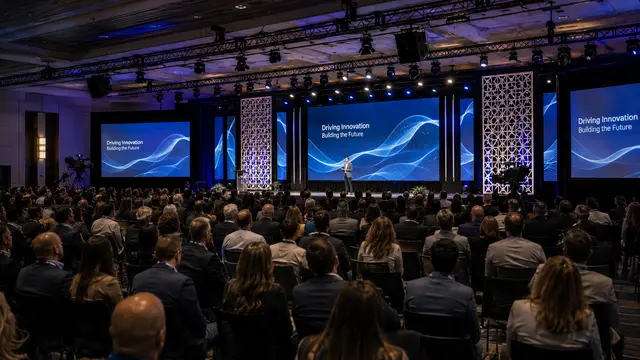
Build an Event Designed for Impact
From creative direction to technical production, create a corporate experience that engages your audience and supports your business goals.
OUR PERFORMANCE AT SCALE
Years Supporting Enterprise Event
Enterprises Client Served
Events Produced Nationwide
U.S. States Supported
Consistent Technical Uptime
What Is Corporate Event Design?
Corporate event design is the strategic planning of how an event looks, functions, communicates, and feels.
A conference, executive summit, sales kickoff, annual meeting, or product launch may require a completely different approach. The audience, venue, agenda, brand, and business objective all influence the final environment.
Effective corporate event design considers:
- Business objective: What should attendees understand, remember, or do?
- Audience experience: How should people move through and interact with the event?
- Creative direction: What visual language supports the brand and message?
- Production: What staging, audio, video, lighting, and technical systems are required?
- Execution: Can the concept be delivered reliably within the venue and event schedule?
Core elements of corporate event design
|
Design Element |
What It Does |
Why It Matters |
|
Stage Design |
Creates the visual focal point for keynotes, panels, awards, and presentations |
Establishes presence and gives the program a professional setting |
|
Scenic Design |
Shapes the physical environment around the stage |
Makes the event space feel intentional and aligned with the brand |
|
LED & Video |
Displays presentations, videos, graphics, branding, and live camera feeds |
Helps audiences see and understand content from every part of the room |
|
Lighting Design |
Defines mood, focus, transitions, and visual atmosphere |
Supports speakers, cameras, scenic elements, and important moments |
|
Audio Design |
Delivers speech, music, video playback, and other sound |
Clear audio is essential for audience comprehension |
|
Brand Integration |
Incorporates company identity into the environment |
Creates a consistent visual experience without overwhelming the room |
|
Presentation Content |
Adapts graphics, videos, animations, and presentations to the production system |
Ensures content looks correct on the actual screens being used |
|
Seating & Audience Flow |
Determines how people enter, move through, and experience the space |
Improves visibility, comfort, networking, and transitions |
|
Camera Design |
Plans camera positions, framing, IMAG, recording, and streaming |
Makes the event work for both in-room and remote audiences |
|
Wayfinding |
Helps attendees navigate registration, sessions, networking, and other areas |
Reduces confusion and improves the overall attendee experience |
|
Show Control |
Coordinates presentations, video playback, lighting, cameras, audio, and cues |
Keeps complex live productions synchronized |
|
Technical Infrastructure |
Accounts for power, rigging, cable paths, internet, backstage access, and equipment placement |
Makes the creative concept practical and safe to execute |
The 5 Layers of High-Performance Corporate Event Design
A successful corporate event doesn't separate strategy, creative design, and production. The strongest results come when these five layers are considered together from the start.
1Start With the Business Objective
Best for: National conventions, trade shows, enterprise conferences, product launches
Before deciding what the stage should look like, define what the event needs to accomplish.
A sales kickoff may need to build energy around new targets. An executive summit may require a more focused and private setting. A product launch may depend on storytelling and a carefully timed reveal.
Start by defining:
- What should attendees understand or do?
- Who is the primary audience?
- What messages need to stay with them?
- Which moments are most important to the business?
These answers guide the creative and production decisions that follow.
2Build the Creative Direction
Good corporate design isn't about adding more visual elements. It's about making the stage, room, branding, and content feel like parts of the same experience.
Once the objective is clear, develop the visual environment around it.
Depending on the event, this can include:
- Stage and scenic design
- LED and video surfaces
- Lighting
- Branding
- Seating and furniture
- Registration and networking areas
- Presentation graphics
- Wayfinding
3Make the Design Production-Ready
A concept can look impressive in a rendering and still create problems at the venue.
Take an LED wall, for example. Its size and shape affect the content canvas, camera shots, presenter positions, sightlines, lighting, and stage dimensions. Similar decisions apply to rigging, audio coverage, cable paths, power, confidence monitors, and backstage space.
Production requirements need to be considered while the design is being developed—not after the creative work is finished.
4Plan for Live Execution
Corporate events often involve far more than a main stage. General sessions, breakout rooms, executive speakers, cameras, video playback, remote participants, sponsors, and attendee transitions may all need to work within the same schedule.
That requires detailed pre-production, technical coordination, rehearsals, show calling, and clearly assigned responsibilities.
For a high-stakes event, reliability isn't separate from the design. It's part of it.
5Design for the Business Outcome
A visually impressive event is only successful if it helps achieve its purpose.
Depending on the program, design and production can support:
- Clearer communication
- Stronger audience engagement
- Brand perception
- Executive presence
- Networking
- Product storytelling
- Sales or employee alignment
- Content that can be reused after the event
The final measure is not simply how the room looked. It's whether the environment helped the organization achieve what the event was built to accomplish.
Bring Production Into the Design Process
Evaluate staging, AV, lighting, and technical requirements before finalizing your design.
What Looks Good in a Rendering Can Fail on the Show Floor
A corporate event design can look perfect in a presentation deck and still create production problems.
Common examples include:
- Poor sightlines: The stage works for the front rows but not the back of the room.
- Oversized displays: The screen dominates the environment without improving communication.
- Lighting conflicts: Scenic or LED surfaces look impressive but create poor camera exposure.
- Rigging limitations: The venue cannot support the proposed overhead design.
- Restricted movement: Scenic elements interfere with speakers, cameras, or audience circulation.
- Content mismatch: Presentation graphics are not designed for the final screen configuration.
These are not design failures alone. They are production planning failures.
This is why experienced corporate event production teams should be involved while the design is still being developed. Early technical input can identify venue limitations, improve the concept, and prevent costly changes during production.
Designing Corporate Events Around the Venue
A venue should influence the design before the creative concept is finalized.
A convention center, hotel ballroom, executive meeting space, and outdoor venue each create different production requirements.
A professional site evaluation should consider:
- Ceiling height and rigging points
- Available power
- Loading dock and freight access
- Stage dimensions
- Room acoustics
- Ambient light
- Audience sightlines
- Camera positions
- Internet connectivity
- Setup and strike windows
- Back-of-house space
A design that ignores these conditions can become expensive—or impossible—to execute.
A corporate event venue may look ideal during a site tour, but the production team still needs to evaluate how the room will accommodate staging, screens, lighting, cameras, audience movement, and technical infrastructure.
The earlier these conflicts are identified, the more options the production team has.
Corporate Event Design for Different Event Types
The right design depends on the event's purpose.
|
Event Type |
Design Priorities |
|
Corporate Conference |
Stage, AV, content visibility, branding, audience flow |
|
Executive Summit |
Premium environment, intimacy, presentation quality |
|
Sales Kickoff |
Energy, storytelling, dynamic visuals, lighting |
|
Product Launch |
Brand reveal, scenic design, video, visual impact |
|
Annual Meeting |
Corporate identity, communication, executive experience |
|
Awards Event |
Stage presentation, lighting, cameras, recognition moments |
|
Large-Scale Convention |
Scalability, multi-room production, wayfinding |
|
Hybrid Event |
In-room experience, cameras, streaming, remote engagement |
The production strategy should change with the audience and objective—not simply with the size of the venue.
How AV Influences Corporate Event Design
AV should be considered while the design is being developed, not after it is finished.
Audio, video, lighting, staging, and content influence one another throughout the production.
Audio
The sound system must provide consistent coverage without overwhelming the room or creating unnecessary spill.
Video
Displays need to be positioned according to audience distance, content requirements, camera coverage, and stage geometry.
Lighting
Lighting needs to support presenters, scenic elements, cameras, video surfaces, and transitions without compromising image quality.
Content
Presentations, videos, motion graphics, and branded visuals should be created for the actual display environment.
Show Control
Major conferences may require coordinated switching, playback, presentation management, lighting cues, camera feeds, and show calling.
When these systems are designed together, the result feels intentional. When they are planned separately, compromises become visible.
How Much Does Corporate Event Design Cost?
Corporate event design costs vary significantly because every event has different creative, technical, and operational requirements. Key cost factors include:
- Audience size
- Venue and location
- Scenic design and staging
- LED walls and displays
- Lighting and audio
- Cameras and video production
- Content and graphics
- Rigging
- Labor and setup
- Rehearsal requirements
- Event duration
- Number of rooms
Because these factors can change the scope considerably, Eleven Eleven Audio Visual should provide customized quotes rather than generic price ranges unless reliable internal pricing data is available.
The best approach is to define the event scope first, then develop a production budget aligned with the event’s goals and requirements.
How Corporate Event Design Supports Event ROI
Corporate event design can influence more than how an event looks. When creative and production decisions are tied to business objectives, they can contribute to measurable outcomes.
- Increase Engagement: Strong stage design, clear visuals, reliable audio, and well-timed production cues help keep attendees focused on key messages and presentations.
- Support Business Goals: Design can reinforce the purpose of a sales kickoff, product launch, executive summit, customer event, or internal meeting.
- Strengthen Brand Perception: Consistent staging, lighting, graphics, and branded environments create a professional experience that reflects the organization.
- Extend Content Value: Recorded sessions, interviews, presentations, and event footage can continue supporting marketing, sales, communications, and training after the event.
- Measure Results: Track metrics such as attendance, session engagement, leads generated, attendee feedback, content views, and post-event actions to evaluate performance.
The strongest ROI comes when event design is planned around the outcome, not simply the appearance of the room.
Corporate Event Design for Large-Scale Conferences
Large conferences require a different level of coordination.
A general session may need to connect with breakout rooms, networking spaces, sponsor areas, executive environments, and remote audiences while maintaining consistent production quality.
This requires planning for:
- Multi-room AV
- Consistent branding
- Audience wayfinding
- Speaker transitions
- Content distribution
- Technical communication
- Multiple production crews
- Recording and streaming
- Backup systems
The objective is not to make every room identical. It is to make the entire event feel like one professionally managed experience.
7 Steps to Build a Production-Ready Corporate Event Design
1. Define the Objective
Establish the business purpose, audience, key messages, and critical moments.
2. Evaluate the Venue
Conduct a technical site survey and identify physical and production limitations.
3. Develop the Creative Direction
Define the stage, scenic environment, visual identity, lighting approach, and attendee experience.
4. Engineer the Production
Determine audio, video, LED, lighting, staging, cameras, power, rigging, control, and crew requirements.
5. Align Content With Technology
Make sure presentations, videos, graphics, and motion content are designed for the actual display and production system.
6. Rehearse the Show
Test speakers, presentations, videos, microphones, cameras, lighting cues, transitions, and technical systems before the audience arrives.
7. Execute With Clear Production Leadership
Assign responsibility for technical direction, show calling, system operation, speaker management, and issue resolution.
The result should be a design that is creative enough to make an impression and engineered enough to perform under pressure.
5 Corporate Event Design Mistakes to Avoid
01
Starting With Aesthetics
A beautiful concept without a clear business objective can become expensive visual noise.
02
Bringing AV in Too Late
Late technical decisions often force changes to stage dimensions, screen positions, lighting, and content.
03
Designing Without a Site Survey
Venue restrictions can fundamentally change what is possible.
04
Ignoring the Back of the Room
A stage designed only from the front-row perspective can fail a large audience.
05
5. Overloading the Design With Technology
More screens, effects, and equipment do not automatically create a better event.
How to Evaluate a Corporate Event Design and Production Partner
For an enterprise event, the production partner should contribute more than equipment.
Look for a team that understands both the creative concept and the technical requirements behind it.
Ask these questions:
Do they understand enterprise-scale events?
Can they participate during the design phase?
Can they evaluate the venue technically?
Can they integrate staging, audio, video, LED, and lighting?
Do they provide experienced technical leadership?
Can they support multi-room conferences?
How do they approach redundancy?
Can they manage production from planning through show day?
The right partner should be able to explain why a production solution is appropriate, not simply provide an equipment list.
For organizations planning a complex conference, explore our Corporate Event Production Services.
Production-Ready Corporate Event Design Checklist
Before finalizing the design, confirm that these areas have been evaluated:
|
Area |
What to Confirm |
|
Objective |
Design supports the event's business goals |
|
Venue |
Space and infrastructure support production |
|
Stage |
Sightlines and presenter positions work |
|
Scenic |
Scenic elements integrate with AV and lighting |
|
LED/Video |
Displays match content and viewing requirements |
|
Lighting |
Supports presenters, room, scenic, and cameras |
|
Audio |
Coverage is clear and consistent |
|
Cameras |
Positions and framing are achievable |
|
Content |
Presentations and video match display systems |
|
Multi-Room |
Breakouts and overflow spaces are coordinated |
|
Risk |
Critical systems have appropriate contingencies |
|
Schedule |
Setup, testing, and rehearsal time is realistic |
If these areas are addressed early, the final design has a much stronger chance of performing as intended.
Corporate Event Design and Production With Eleven Eleven
The strongest corporate events are designed with production in mind from the beginning.
Eleven Eleven Audio Visual helps enterprise organizations translate event concepts into production-ready experiences, connecting staging, scenic design, audio, LED and video, lighting, cameras, content, recording, streaming, and technical execution.
Our approach is built around the realities of corporate conferences and large-scale events: complex venues, executive presentations, multi-room programs, demanding schedules, technical risk, and audience expectations.
Whether you are planning a corporate conference, sales kickoff, executive summit, annual meeting, product launch, or large-scale corporate event, production should be part of the design conversation before the final concept is locked.